
By George Sass Jr.
634 Miles, 37 Hours, and a Weekend in Bermuda
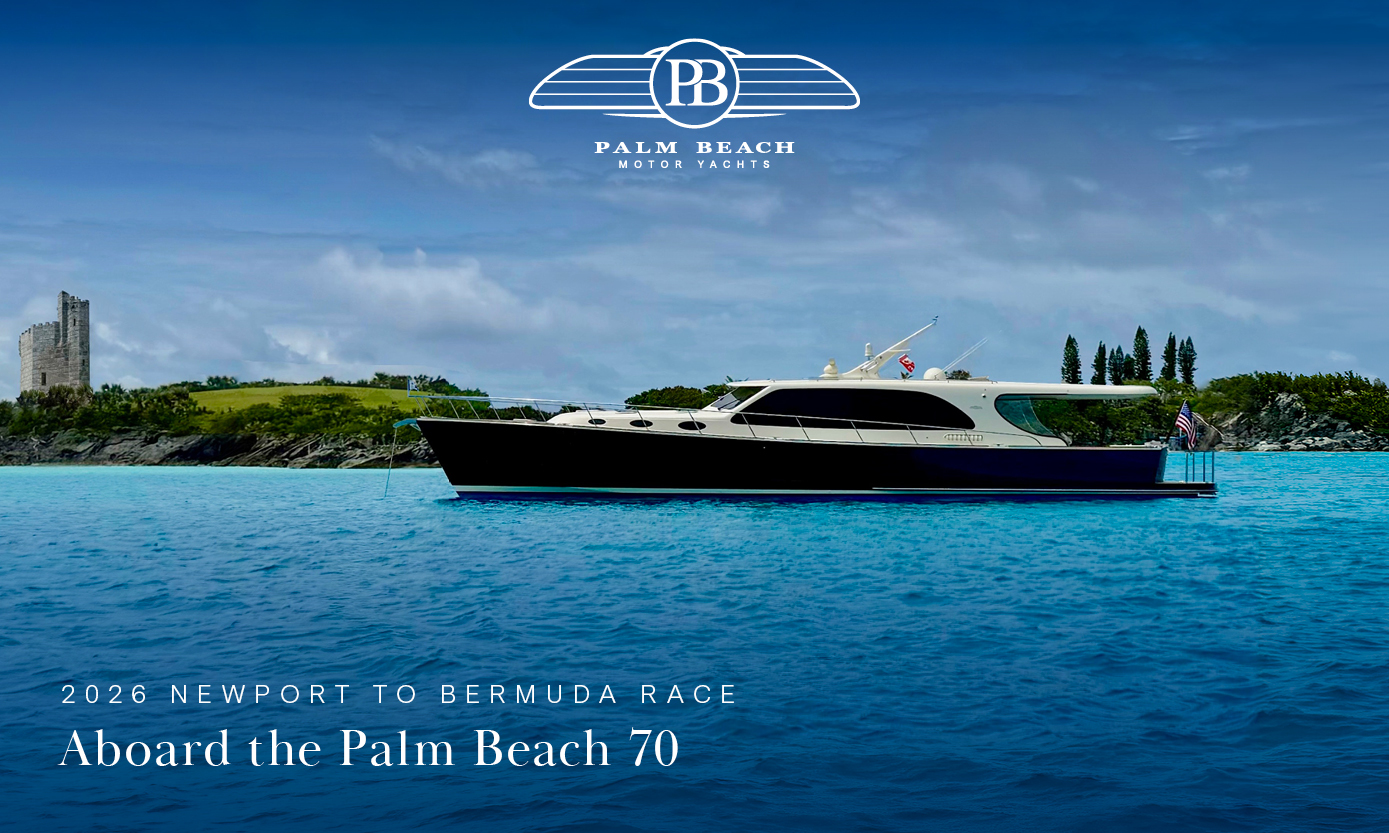
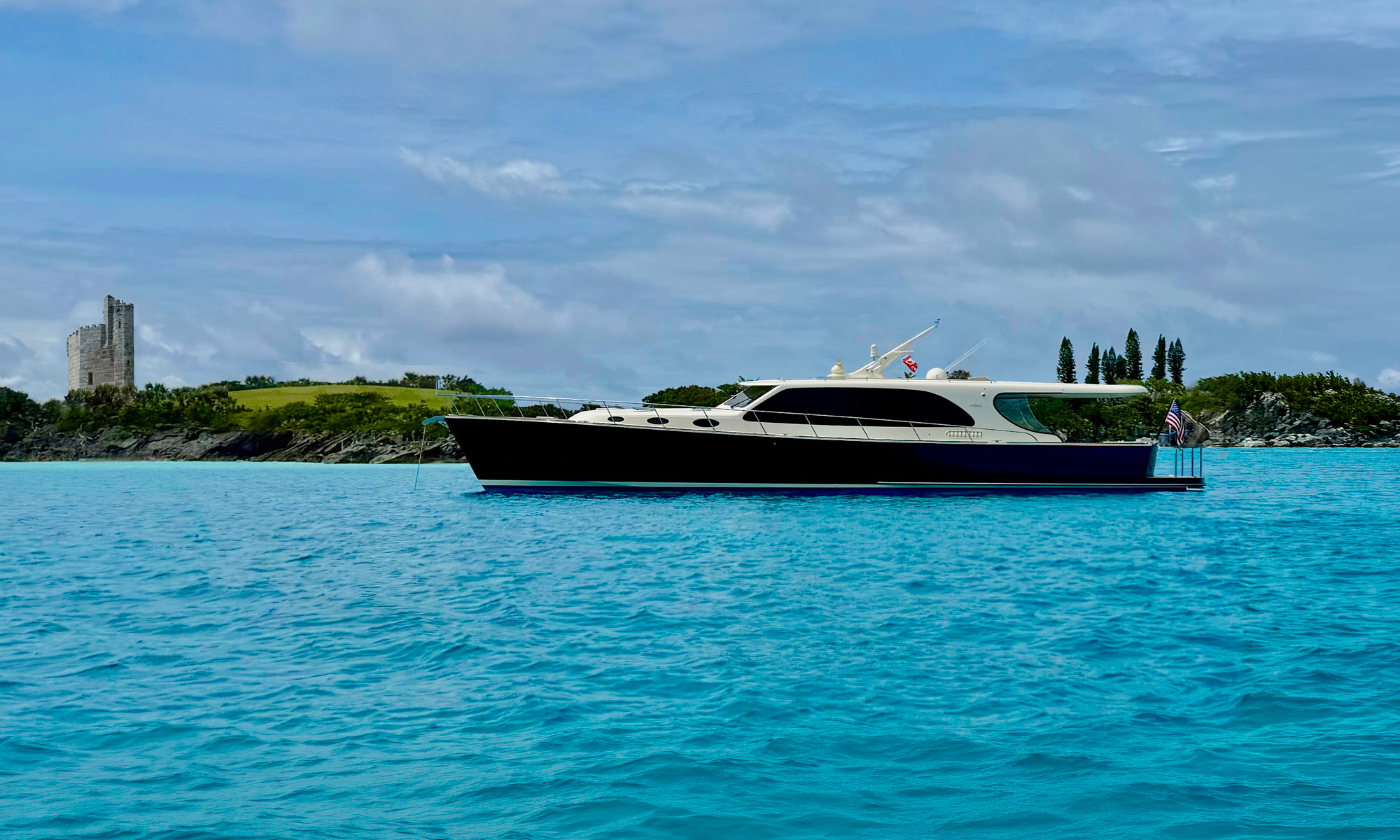
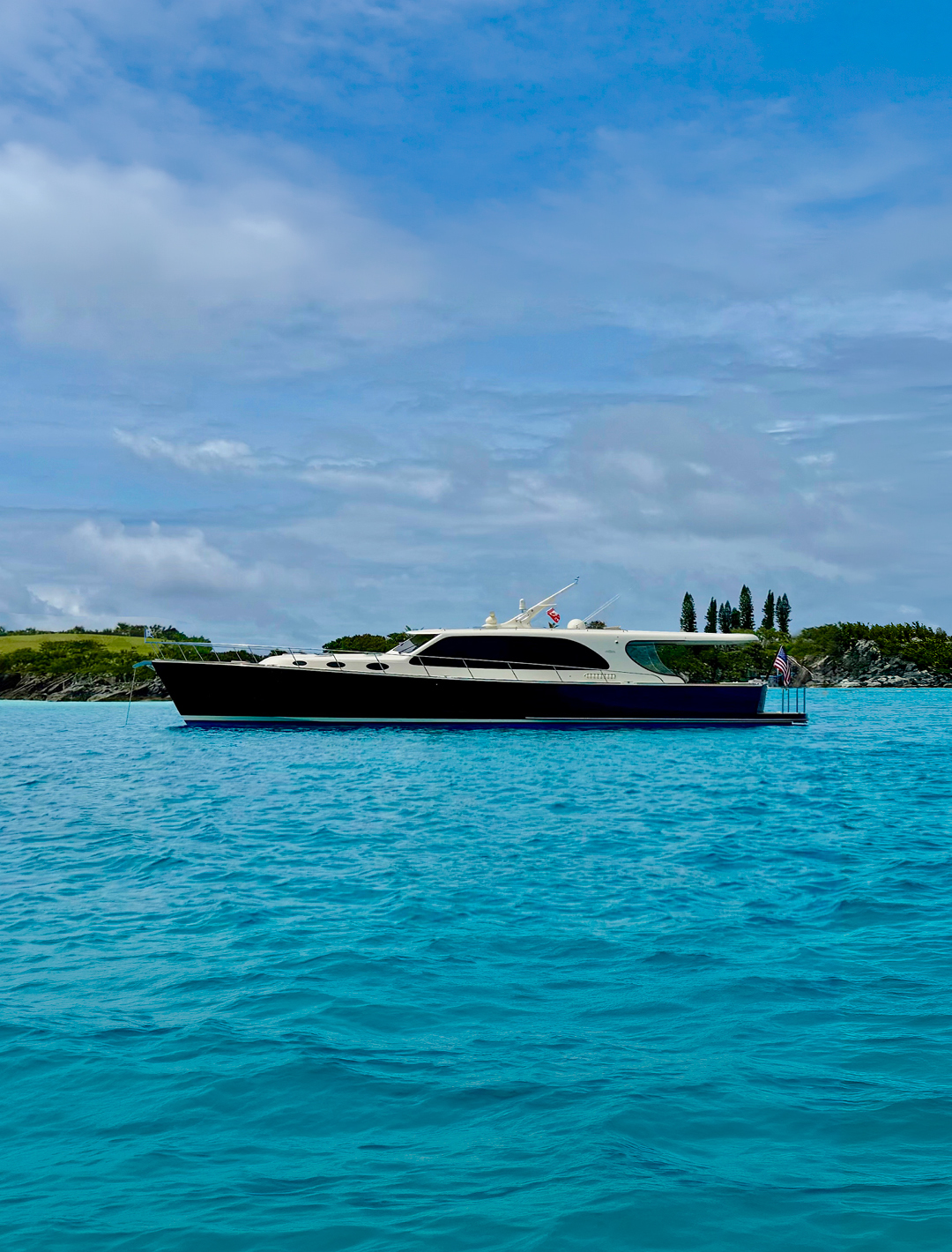
The Palm Beach 70 Zephyr covered the 634-nautical-mile passage from Newport, Rhode Island, to Bermuda in 37 hours, averaging 19 knots through 8- to 12-foot beam seas. Along the way, she quietly demonstrated something that doesn’t always come across on a spec sheet: offshore passages aren’t about dramatic moments. It’s about the complete absence of them. For Zephyr, Bermuda wasn’t an expedition. It was simply the beginning of a special cruise for her owners.
Here’s something most people don’t tell you about going to sea. Long before the dock lines are cast off, the voyage has already begun.
The rituals start months before departure and gather momentum as the date approaches. Crew selection. Maintenance. Weather routing. Safety equipment. Provisioning. And, if we’re being honest, far more discussion about the menu than the engine spares.
After nearly 100,000 miles offshore, I’ve learned that the ocean is wonderfully indifferent to confidence. The thing to fear usually isn’t the storm you can see coming. It’s complacency. The day you convince yourself you’ve done this enough times to skip a step is often the day the ocean decides otherwise.
Which is exactly why Simon Davidson has earned the confidence of Palm Beach Motor Yachts' owners throughout New England. Long before anyone stepped aboard with a duffel bag, Simon was already walking the boat one more time than most people would think necessary.
Weather models were reviewed. Systems checked. Safety gear verified. Professional captains understand something every experienced passagemaker eventually learns: good crossings are rarely the product of luck. They’re almost always the product of preparation. By the time we departed Newport to follow the 54th Newport Bermuda Race, everyone aboard fell into their role.
Our watch schedule settled naturally into a rhythm three hours on watch, six hours off. “It just gives us all some variety,” explained Simon. “If you get tired or have issues, just say so.” Through the night, the helm remained quietly occupied while the off-watch crew grabbed sleep in the forward staterooms or salon. Before long, time stopped being measured by hours and became measured by watch changes, sunrise, meals, and the next weather update.
Founder and CEO Mark Richards joined us aboard alongside the yacht’s owner, an experienced yachtsman who had previously owned a Palm Beach 55, and his adult son. Rounding out the crew was Lauren Darby Zike, host of The Gulf Stream Show, broadcasting daily from inside the race.
There wasn’t much discussion about business. Instead, conversations drifted naturally toward boats, ocean crossings, weather, memorable passages, and the sea stories that inevitably accumulate after decades on the water. It was enjoyable watching Mark and the owner compare notes, each approaching the ocean from slightly different experiences but speaking the same language. There was no drama aboard. Just experienced people enjoying time at sea.
The Atlantic Doesn’t Read Spec Sheets
The Newport Bermuda Race has been testing sailors since 1906. The 54th running brought nearly 150 boats across 636 miles of Atlantic Ocean from Newport to the Royal Bermuda Yacht Club.
This year’s fleet encountered everything offshore sailors expect: steep early seas leaving Narragansett Bay, light air south of the Gulf Stream, shifting current, and tactical decisions that changed by the hour. The race also marked the centennial partnership between the Cruising Club of America and the Royal Bermuda Yacht Club, a milestone worthy of celebration in its own right.
For Palm Beach Motor Yachts, however, the race offers something else. The Atlantic, or any ocean, doesn’t read spec sheets. It doesn’t care how beautiful the brochure is or what a builder promises. It simply reveals what works. Balance. Efficiency. Seakeeping. Those qualities aren’t measured during carefully choreographed sea trials on some river. They’re earned hundreds of miles offshore, far away from a boatyard and service technician.
Racing DNA with a Different Purpose
At first glance, a 100-foot Supermaxi and a Palm Beach motor yacht seem to occupy different worlds. Look closer, however, and the same philosophy runs through both. Palm Beach XI, formerly the legendary Wild Oats XI, continues under Mark Richards and Palm Beach Motor Yachts as an active offshore racing program and, perhaps more importantly, as a floating engineering laboratory.
“Whether it’s a 100-foot Supermaxi or a Palm Beach Motor Yacht, our principles never change: maximize strength, minimize weight, and pursue performance without compromise,”explains Richards. Every offshore mile teaches something. Hydrodynamics. Composite engineering. Weight distribution. Structural efficiency. Lessons learned racing eventually find their way into the cruising yachts owners take exploring. And yes, a race boat may chase trophies, but a properly designed cruising yacht uses the same thinking to make long passages and adventures easier, quieter, and more enjoyable.
Offshore, Numbers Become Experiences
We departed Newport on Friday. We were tying up in Bermuda on Sunday morning. Thirty-seven hours. Just as importantly, we weren’t attempting a record or staging a carefully choreographed demonstration. We simply made the passage the way thousands of offshore sailors have for decades; straight down the rhumbline, confident in the boat beneath us. Zephyr averaged 19 knots through consistent 8- to 12-foot beam seas. Of course, on paper that’s a statistic. Offshore, it feels very different. Breakfast burritos stayed on the table. Drinks remained in the mugs. Conversations were uninterrupted. Nobody instinctively reached for a handhold every time another swell arrived on the beam.
Outside, the Atlantic continued doing what the Atlantic often does. Inside, it simply felt like another morning aboard. No bow rise. No pounding. Just the quiet rhythm of a balanced hull doing exactly what it was designed to do. Throughout the passage, Lauren continued filming The Gulf Stream Show while Zephyr maneuvered comfortably among the racing fleet.
Meanwhile, the twin Garmin displays became their own source of fascination. Every experienced captain develops a preferred bridge layout. Some prioritize radar. Others weather overlays, engine data, AIS targets, or chart detail. The flexibility of the dual displays meant everyone could tailor the helm to the conditions and to their own habits, a small detail perhaps, but one that became surprisingly appreciated over 37 continuous hours offshore.
A Television Studio in the Middle of the Atlantic
The 2026 Newport Bermuda Race also introduced The Gulf Stream Show—a five-day live broadcast filmed from inside the race itself.
Every afternoon Lauren Darby Zike delivered race updates, interviews, weather analysis, and commentary while Zephyr quietly carried its own floating television studio across the Atlantic. For three straight days, cameras rolled. Interviews happened. Weather changed and the Palm Beach 70 simply carried on.
The Best Part of the Story
By Sunday morning the lines were tied to the Royal Bermuda Yacht Club and plans turned to the next stops. Perhaps that’s the most revealing detail of the entire trip. Once the passage was behind us, nobody talked about having just come 634 miles across the Atlantic. Conversations focused on dinner reservations. About where to cruise next. About spending time in Bermuda. Pull the thread and it all connects. Simon and the owner preparing the boat.
Mark continuing to apply every lesson from every offshore mile. Palm Beach XI racing halfway around the world.
All those rituals that begin months before departure—the weather briefings, the maintenance, the provisioning, the safety checks, even the endless conversations about food—exist for one reason. So that once you’re offshore, you stop thinking about the boat and simply enjoy where it’s taking you. By Sunday morning, Zephyr was securely tied alongside in Bermuda with more adventures still ahead.